You're Not Watching TV — You're Medicating With It
Let's Be Honest About What's Actually Happening on Your Couch
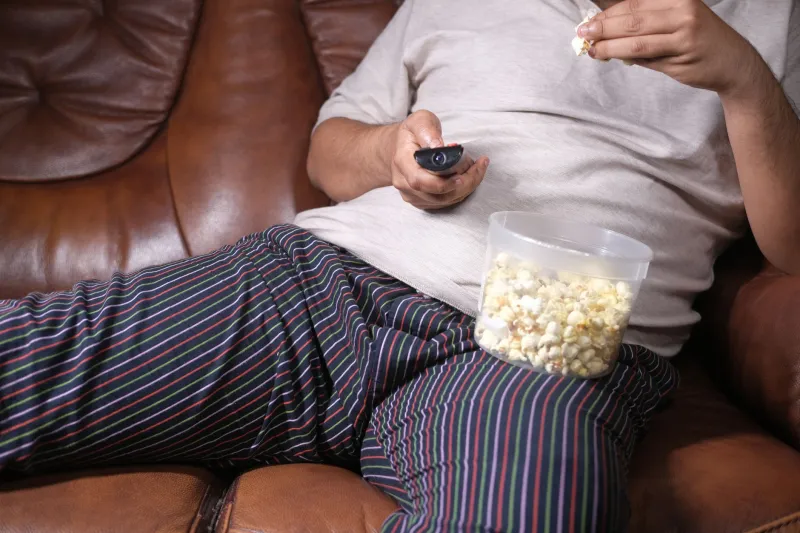
You get home. You're tired. You open the fridge, close it without taking anything, and then fall onto the couch and flip on something — anything — just to have noise and light in the room. An hour later, you couldn't tell someone the name of the episode you just watched. Two hours later, you're still there, and the autoplay has already made three decisions on your behalf.
We call all of this entertainment. But here's the thing — a lot of it isn't. Not really.
Entertainment, in the actual sense of the word, implies engagement. It implies that something is happening between you and the story. Your brain is tracking characters, caring about outcomes, laughing at the right moments, feeling something when the music swells. That's entertainment. What most of us are doing on a Tuesday night after work is something else entirely. It's closer to sedation. And the fact that we keep calling it the same thing is doing us a quiet kind of damage.
The Vocabulary Problem
When we lump genuine storytelling in with background noise TV, we give ourselves permission to never examine the difference. Everything becomes "just watching something," and "just watching something" sounds harmless enough that nobody questions it.
But think about the last show that actually got you. The one where you were leaning forward slightly without realizing it. Where a character made a choice and you felt your stomach drop. Where you finished an episode and sat with it for a minute before doing anything else. That experience is real entertainment. It's doing something to your brain and your emotions that matters.
Now think about what you watched last Thursday. Do you remember it? Could you describe a single scene? Did any part of it stay with you past the moment you turned it off?
If the answer is no, that's not a judgment. It's just data. And the data is saying that what you were doing wasn't really watching — it was using the television the same way some people use a white noise machine. It was filling space. Blocking out the quiet. Postponing the moment when you'd have to sit with your own thoughts.
There's nothing wrong with needing that sometimes. The problem is when we stop being able to tell the difference.
Why the Blur Happened
Streaming made this worse in a very specific way. When you had to wait a week between episodes, there was a natural rhythm that forced you to actually process what you'd seen. You'd think about it. Talk about it. Maybe read something online about it. The story had time to breathe in your head before the next installment arrived.
Now the next episode loads before the credits finish rolling. The platform has already decided you're continuing. The choice to stop requires more active effort than the choice to keep going. So most people keep going — not because they're gripped by the story, but because stopping feels like doing something, and doing nothing is the path of least resistance.
That's not a design flaw. That's the design. The platforms aren't trying to give you great entertainment. They're trying to keep the screen on. Those are two very different goals, and only one of them is actually on your side.
What Genuine Engagement Actually Feels Like
Here's a low-tech test. After you finish watching something, give yourself sixty seconds before you pick up your phone or start the next thing. Just sit there. What comes up?
If you're thinking about the show — about a character, a line, a moment that surprised you — that's a sign something real happened. The story got inside you a little. That's entertainment doing its job.
If you immediately reach for your phone because the silence feels uncomfortable, or if you can barely remember what you just watched, that's the other thing. That's the sedation. The screen was doing the same job as scrolling — filling the space between one moment and the next without asking anything of you.
Neither one makes you a bad person. But only one of them is actually giving you something.
The Joy Question Nobody Asks
Here's what I'd push people to actually sit with: Does your current viewing habit bring you joy? Not comfort, not numbness, not distraction — actual joy.
Joy from entertainment is specific. It's the feeling you get when a show makes you care about people who don't exist. When a movie makes you feel something you couldn't have predicted walking in. When a comedian says exactly the thing you've been thinking but couldn't articulate. That's the stuff worth protecting in your screen time.
The rest of it — the two hours of autoplay you barely remember, the reality TV you watch with one eye while scrolling with the other hand, the rerun you've seen four times that you're using as wallpaper — that's not joy. That's just the absence of discomfort. And those two things feel similar enough in the moment that most of us have stopped distinguishing between them.
This Isn't a Lecture About Watching Less TV
I want to be clear about something. This isn't a piece arguing that you should cancel your subscriptions and take up hiking. Watch as much TV as you want. Watch garbage TV if you love it. Watch the same comfort rerun for the fifteenth time if it genuinely makes you happy.
But do it with a little bit of honesty about what it is. Because the moment you can tell the difference between watching something that's genuinely working on you versus watching something that's just keeping the silence away — that's when you can actually make a choice about it.
You can decide to seek out the stuff that earns your attention. You can decide to watch less but feel more. You can decide that your two hours after work deserve something that gives back.
Or you can keep doing what you're doing. That's fine too. Just don't call it entertainment if it isn't. Call it what it actually is — a very understandable, very human way of getting through the day.
The honest name for it doesn't make it shameful. It just makes it real. And real is a better place to start than pretending.