Half There: The Sneaky Way We've Convinced Ourselves We're Actually Watching TV
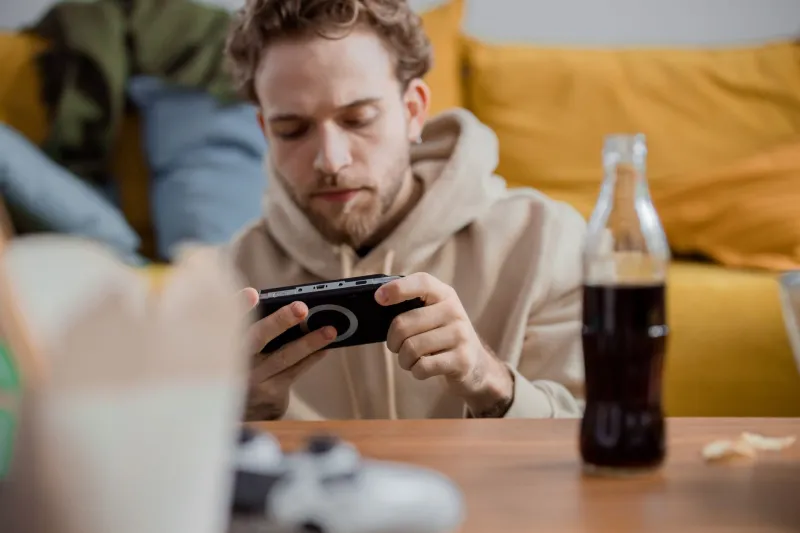
Let me paint you a picture. It's a Tuesday night. There's a show on — something you've been meaning to get to, something your coworker mentioned, something that's been sitting in your queue for three weeks. The TV is on. You are technically in the room. Your phone is also in your hand, your Instagram feed is moving, and somewhere around the twenty-minute mark you realize you have absolutely no idea what just happened on screen.
You rewind. Maybe. Or maybe you just keep going and hope context fills in the blanks later.
This is the quiet arrangement we've all made with modern television, and almost nobody is being honest about it.
Background Noise With a Subscription Fee
At some point in the last decade, television quietly transitioned from something you watched to something you ran. It plays. It fills the room. It keeps the silence from getting too loud. And we've developed an entire vocabulary to legitimize this — we say we're "catching up," we say we're "getting through" a season, we say we "watched" something when what we really did was let it exist in our general vicinity for several hours.
The streaming era didn't create this habit, but it absolutely supercharged it. When every show is available on demand, always, forever, the urgency to actually pay attention evaporates. You can rewind. You can rewatch. You can look up a recap. There's always an escape hatch from the commitment of actual presence, and our brains figured that out immediately.
So we multitask. We fold laundry. We text. We scroll. We do the dishes while a prestige drama plays out its most emotionally devastating scene in the background, and we catch maybe forty percent of the dialogue, and we call that watching.
The Claim vs. The Reality
Here's where it gets socially interesting. We still claim these shows. Loudly. Confidently. Someone brings up a series at work and we jump in — "Oh yeah, I watched that" — and we mean it, in the loosest possible interpretation of the word. We were present-adjacent. We absorbed the vibe. We know the character names and we have a general sense of the plot arc.
But if someone asks us to describe a specific episode, or explain a plot twist, or talk about why a character made a particular choice? The response gets fuzzy real fast.
This wouldn't matter much except that it's shaping how we evaluate content. We're rating shows on Letterboxd and leaving reviews on streaming platforms based on a viewing experience that was maybe sixty percent audio and forty percent visual, absorbed while simultaneously managing three other tasks. That feedback loop is broken in a way nobody in the industry wants to acknowledge because the numbers still look fine. The watch hours are there. The completion rates tell one story. The actual retention in the viewer's head tells a completely different one.
Why We Don't Admit It
There's a small but real social cost to saying "I didn't really watch that." It positions you as someone who hasn't done the thing. In a culture where entertainment consumption has become its own form of cultural currency — where not having seen something is a mild embarrassment — admitting you only sort of watched it feels like cheating on a test you were supposed to study for.
So we fudge it. We say we watched it. We lean on whatever we did absorb to carry us through the conversation. And the cycle continues.
There's also the comfort angle, which is worth sitting with. A lot of half-attention viewing isn't laziness — it's regulation. Having something on while you're doing something else is genuinely soothing for a lot of people. The noise, the voices, the sense of a story moving through the room — it's companionship without demand. That's not nothing. That's actually a pretty human need.
But calling that "watching" is still a stretch.
What This Costs the Actual Good Stuff
The shows that get hurt most by half-attention viewing are the ones that actually require you to be there. The dense, layered, slow-burn storytelling that rewards close watching — the kind of television that people claim to love — is precisely the kind that evaporates when you're also checking your mentions.
And then those shows get described as "hard to follow" or "slow" or "not that engaging" by viewers who were never fully in the room to begin with. The problem gets attributed to the writing when the problem was the viewing conditions.
Meanwhile, the shows that work fine as background noise — the procedurals, the reality competitions, the comfort rewatches — hold up just fine under half-attention conditions. They're designed for it, whether intentionally or not. Loud, clear, repetitive, emotionally legible from fifteen feet away while you're making dinner.
There's nothing wrong with that. But it does mean we're quietly sorting our entertainment by how well it survives our own inattention, which is a weird thing to optimize for.
Just Own It
Here's an unpopular suggestion: just be honest about how you watched something. Not as a confession, not as an apology — just as an accurate description. "I had it on while I was cleaning" is a perfectly legitimate sentence. "I was kind of half-watching it" does not make you a bad person.
What it does is give you — and everyone else — a more honest baseline for the conversation. It stops the feedback loop where shows get evaluated on viewing experiences that never really happened. And it might, occasionally, remind you that some things are actually worth putting the phone down for.
Not everything. Not most things, honestly. But some things.
The TV will still be there when you get back from the kitchen. The show will still be running. Whether you're actually with it is the question only you can answer — and only if you're willing to stop lying about it first.